Category Archives: Uncategorized

Tip-toeing through puddles

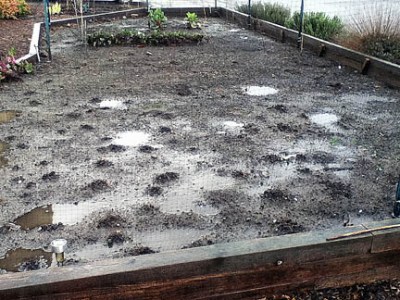
…rather than tulips.  Perhaps slogging is a better term; definitely rubber boots weather!

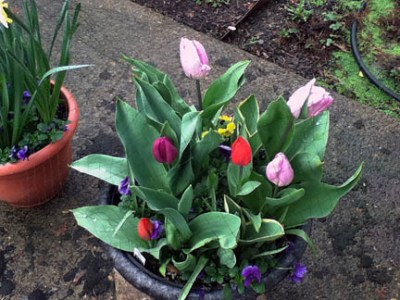
Thank goodness for an assortment of blooming tulips and daffodiles to welcome the onset of Spring in western Oregon, which greeted us with more strong rains.

mar-12-16 tulips

Tulips to the rescue to welcome Spring, while puddles prevail!

Three days of no rain let the previous puddles drain away, and provided us with a chance to dash into the garden to do more pruning, throw on some fertilizers, weed, and minor transplanting.  Even a hike into the forest as we felt an energizing rise in temperature.

Equinox today bestows us with more puddles.  It has been a day for inside work, cleaning and refilling the bird feeders, reading, cooking, and contemplating future strategy for garden projects (like re-establishing medicinal plants I used to have).

Kind of a “retro-spring” in my mind; reminiscent of winter/springs a couple of decades ago, before the warmer, drier shifts of the last few years.  In that sense many of us locals don’t mind “global warming”.

mar-12-16 waterlogged

Not even thinking about the CG yet! But weeds are easy to pull!

Welcoming more noticeable light to our northern hemisphere days, while knowing it is harvest-season in the southern hemisphere!  May we/you be bountiful in all areas!

mar-12-2016 blooms

Hyacinths and primroses deal with all four seasons of spring weather!


Incorporating Edibles into Your Landscape

While weeding and wading through the CG and yard with the rubber boots, waiting out the big storms this weekend, here’s a delightful entry from one of our local retail nurseries!

karenhopson's avatarThe View From the Barn

Edible_bedGrowing fresh fruits, vegetables and herbs brings the wholesome goodness of these tasty treats right to your table. Many of us don’t have time or space for a full-fledged vegetable garden and orchard but we can still incorporate our favorite edibles into existing gardens or containers on balconies, decks or patios.

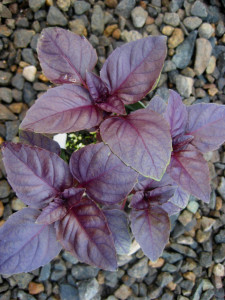
Several culinary herbs are as attractive as they are flavorful. Consider the beauty and fragrance of lavender, rosemary and lemon thyme. Also striking in borders is the smoky, filigree foliage of bronze fennel, the pebbly-textured, aromatic foliage of sage in green, purple, tricolor or golden hues and the glossy purple foliage of Red Rubin or Purple Ruffles basil. Parsley and cilantro, so tasty in many Basil.RedRubinrecipes, make lovely clumps of finely-cut green foliage with interesting texture. Chives bearing fluffy purplish-pink flowers above grassy-looking foliage and garlic chives, sporting starbursts of white blooms in late summer, can provide lovely cut…

View original post 494 more words

Winter inspiration

While wintry sleet and freezing rain make it rather inhospitable for yard work-play, it does provide for more leisurely musings of the lively feathered visitors to the feeders.  Scanning the yard for the possible early casualties of the week’s freezing temperatures, most everything seems settled.  White sage is out of it’s typical chaparral environment, so it naturally went into decline with the inset do long bouts with of rain, after a freeze; May is the time for revealing the success of mulching its base.

And for many garden enthusiasts this is the time for inspiration; for dreaming, for pondering, for planning what their new outdoor spaces might become, or how existing spaces might be enhanced.

Some inspirational resources are listed here:

https://highvibebounty.com/project-history/inspire-yourself/

There are so many books and resources available that provide valuable information, depending on one’s tastes, preferences, and experience.  However, a few of those that seem to me to offer some unique ideas, while being practical and not so overwhelming are offered as suggestions and places to explore.  There are no rules against using snippets of ideas from many resources to create what you like.

Happy New Year! Enjoy exploring, dreaming, and becoming inspired to find your own style!  “Simple” is a good way to start!

A favorite!


We’d like some real rain…please and thank you!

The typical ides of late summer, come earlier than usual, of course.  While we await a much needed, hopefully-for-real, forecasted spell of precipitation in a few days, you are invited to take a short tour through the nooks of the CG, as it gets cleared of tired and/or over-browsed plants after harvesting the bounty!  True, most of the yard looks great, (just a bigger water bill to keep them from dying, and grateful we don’t have water rationing); but their stress is detectable.  Fortunately the lower sun angle as we drift towards fall helps keep moisture around longer. Given the soil crevasses in the beds, surrounding any soaker-hosed segments, it is always amazing how productive and resilient some plants are, with relatively small root systems, relative to their top growth!

The season of thinning out!

The season of thinning out!  Basil and tomatoes galore.

They've had enough!

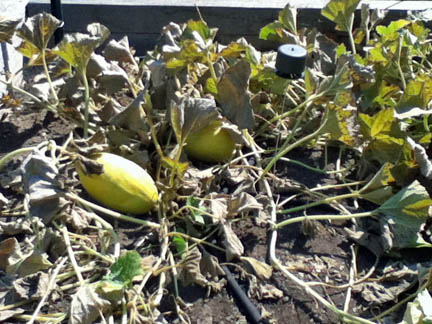
They’ve had enough!  Hot and dry is OK for awhile, but then just the right humidity makes the mildew pop right up on those leaves.  The melons are pushing the usual size limit for this ‘Margarita’ variety.

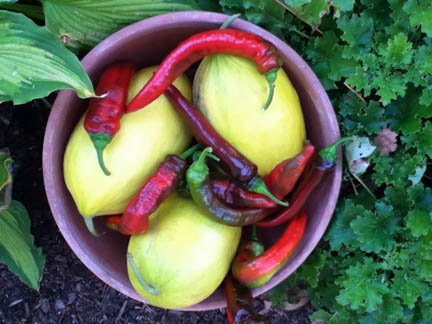
Fabulous colors of garden bounty! The lime-yellow of 'Margarita' melons laced with sweet red peppers! These melons are pale green inside, with a very mild flavor--the color of margaritas!

Fabulous colors of garden bounty! The lime-yellow of ‘Margarita’ melons laced with sweet red peppers! These melons are pale green inside, with a very mild flavor–the color of margaritas!

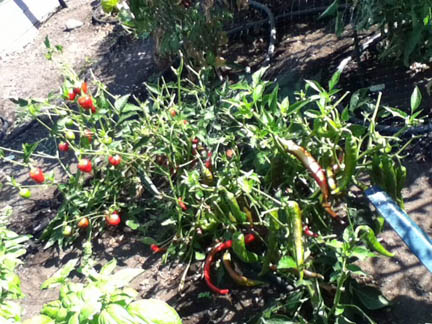
Our discriminating deer is wise--no eating hot peppers, just eat all the leaf tips!

Our discriminating deer is wise–no eating hot peppers, just eat all the leaf tips!

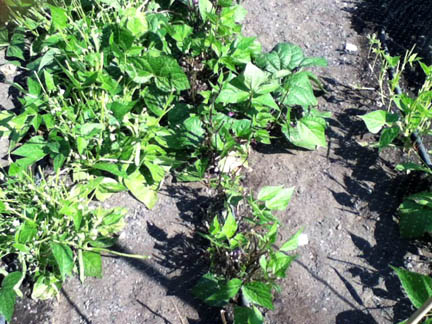
Bound and determined bushes have eeked out a few beans from their bases.

Bound and determined bushes have eeked out a few beans from their bases; while the 4-footed browser insists on picking at whatever stems he can reach through the netting.

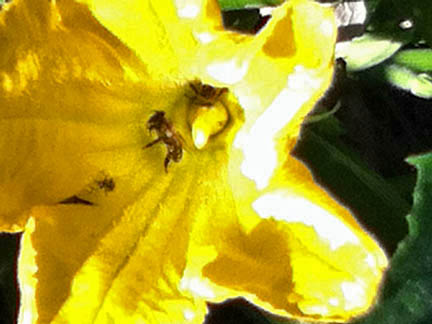
Bee party still going strong in the summer squash blossoms!

Bee party still going strong in the summer squash blossoms!

Aspen and Juni checking out the photo session.

Aspen and Juni sensing some moisture in the air, but where is it for the ground?

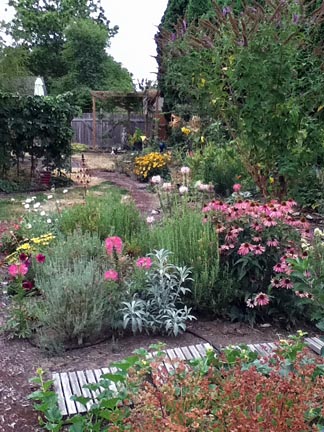
House yard still holding its own; lavender is tired and resting for the season.

House yard still holding its own; Spanish lavender is tired and resting for the season.  Echinacea takes over supporting the pollinators!

Luscious grapes, still a bit tart, but almost ready for harvest!

Luscious grapes, still a bit tart, but almost ready for harvest!

Aspen finding the easy way to deal with heat...shade!

Aspen finding the easy way to deal with heat…shade!


Sign, sealed, delivered…with rain

Almost to the hour, a long-needed dose of rain started to fall as we officially entered the fall equinox.

Our seemingly extended summer outdid itself in record-setting days near 90ºF for weeks on end, especially since the last post.  Any hints of rain or moisture seemed to vanish into some other reality, or released more as vapor than solid precipitation.  Watering became a daily need until after Labor Day, when the sun angle was lower and there were noticeably fewer daylight hours.

Blessed with three days of substantial rain, delivered mainly during the nights, with a couple of strong squalls during the day, we are now enjoying some beautifully mild temperatures.  As I write the sun is getting low on the horizon and there are many tiny insects buzzing, whirling, and floating in the bright light, also highlighting the many gossamer strands of cobwebs.  And there are about ten raindrops glistening as they fall from the stray cloud that is just passing overhead.

It smells heavenly, and myriad plants are looking more relaxed.  A bit of a paradox for some of them, as the change in season also diminishes their stimulus to grow indefinitely.  Most of the squashes have succumbed to the familiar mildew, yet a couple of them keep pushing out some new growth, making the plants look rather hilarious.  The tomatoes are following suit, and most have already been harvested.

Sept26-2014a

Relief on the way with fall rain. Tomatoes and squash are succumbing to the change in season, while the nasturtiums have come back onto full glory.

Things were looking pretty good for awhile for a new crop of green beans and a succulent row of lettuce….until last weekend, when the Bambies found their way into the garden again, and munched down the bean plants plus a few tender tomato sprouts.  The beans themselves are looking a little bigger, so there may be some for picking, but somewhere in the last 2 days they returned and munched down the baby lettuces, so there is fall’s crop gone.  At least they don’t like beets or basil

Four-legged browsers at it again!  Where there is a will there is a way....in.

Four-legged browsers at it again! Where there is a will there is a way….in.

Hoping others are having a bountiful harvest! it’s time to make some pesto before the basil declines with wet and cooler weather!

Musings during another heat wave

We are having our share of heat waves this summer, interspersed with quick blips of cooler temps and a day of badly needed rain a week ago.  Hooray, no watering for 3 days!  But that was about it.  We are nearing the height of summer, and it’s nice to take a few moments out from the incessant yard chores, to finally sit and watch the jujube skippers and cabbage moth loopers flitting about on the zinnias.  Three turkey vultures are catching heat currents and soaring high above the nearby forest, and above all this the cloud sylphs are shape-shifting.  The Stargazer lilies are in peak form, releasing their exquisite perfume.  There are even a couple of roses open, having survived a few deer nibblings.  Weeds are happy, too, but I am just letting them stay in place for awhile longer.

These cloud-sylphs demanded my attention by literally taking on the shapes of jellyfish in the space of 2 minutes.  As they passed over the street, they retracted their "tentacles" after another 5 minutes.  I think they were having too much fun!

These cloud-sylphs demanded my attention by literally taking on the shapes of jellyfish in the space of 2 minutes. As they passed over the street, they retracted their “tentacles” after another 5 minutes. I think they were having too much fun!

Actually taken in June-2013; lots of chemtrail action overhead.  An eerie combination of a chemtrail and a sundog that came into formation after the jet flew off.

Actually taken in June-2013; lots of chemtrail action overhead. An eerie combination of a chemtrail and a sundog that came into formation after the jet flew off.  The sun above caused a shadow below the chemtrail.

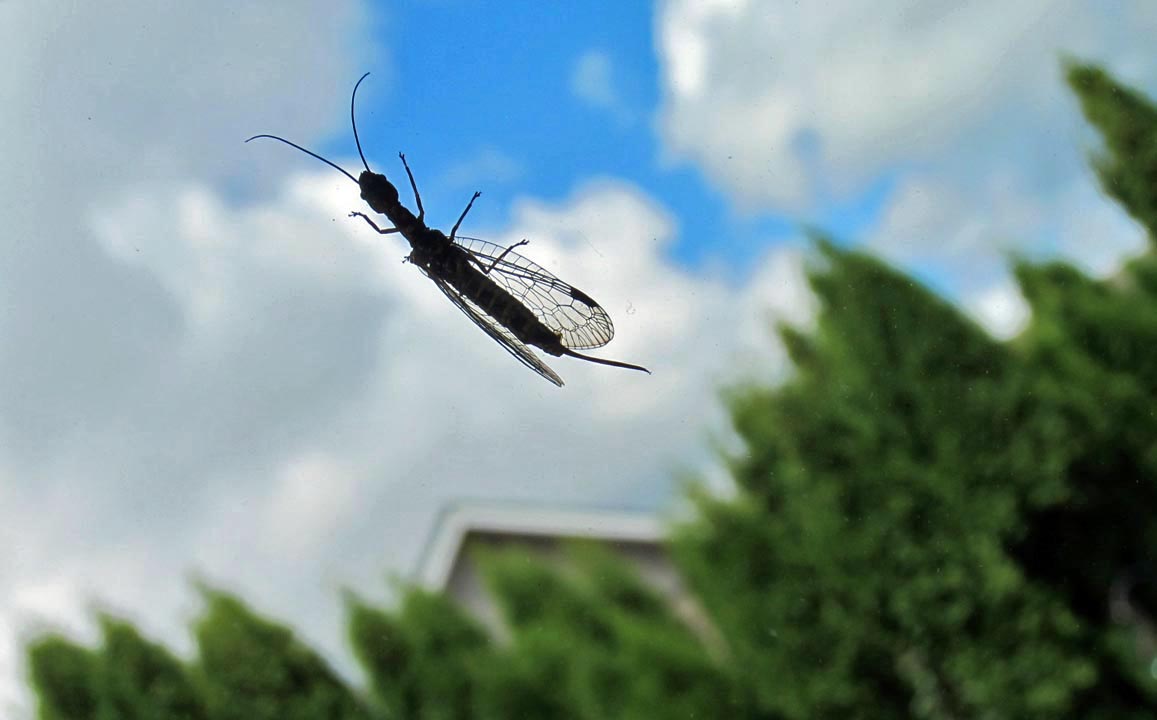
Snakefly!  A treat to see one land outside my patio door.  This is a female, with that long ovipositor at the end.  These are some of nature's natural pest controllers.  She is about 1.5" long.

Snakefly! A treat to see one land outside my patio door. This is a female, with that long ovipositor at the end. These are some of nature’s natural pest controllers. She is about 1.5″ long.

When an artichoke thistle flower resembles a lotus flower.  Nature's magical geometry.

When an artichoke thistle flower resembles a lotus flower. Nature’s magical geometry.

Beautiful Icicle radishes...hassled by a swarm of flea beetles, but they only bother the leaves.  We try to eat the radishes faster than they can.

Beautiful Icicle radishes…hassled by a swarm of flea beetles, but they only bother the leaves. We try to eat the radishes faster than they can.

Entering the peak season of maturity: lettuce overlapping with bush beans, squash blossoms, baby zucchini, and green tomatoes!  July 23-2014

Entering the peak season of maturity: lettuce overlapping with bush beans, squash blossoms, baby zucchini, and green tomatoes! July 23-2014.

Hope everyone is enjoying summer in some manner!


The ladybug hatchery is hopping…on the hops

For whatever reason, the hops plant outside the front door, whose vines screen the patio area from direct street view became a designated ladybug-generating factory.  This also means that there was an aphid attack.  The plant has never had insect problems before, but like my apples and some other plants that normally never get visited by aphids, this is the year of infestation, in spite of a very cold winter.

Hops hatchery

The hops ladybug hatchery and nursery.

Normally, the honeysuckle serves as the garden’s aphid residence, and the rest of the plants are spared any infestations.  The stalwart honeysuckle starts to look very shabby by the end of June, its new buds barely able to blossom forth before being smothered by aphid larvae, but it has no problem surviving.  I remain grateful to it for its sacrifice in this way.  Ladybugs hang out on it also, but don’t ever seem to gain the upper hand in controlling the aphids.

Never before have I seen so many immature ladybugs in so many stages of development,on a single plant, and I have no idea where the adults came from.  Perhaps some neighbor released a packet of several hundred, and, typical of these creatures, they left their original release area in search of food elsewhere.  It’s a blessing to have so many of these beauties around, contributing their assistance to the bounty!  And they always bring smiles to people’s faces.

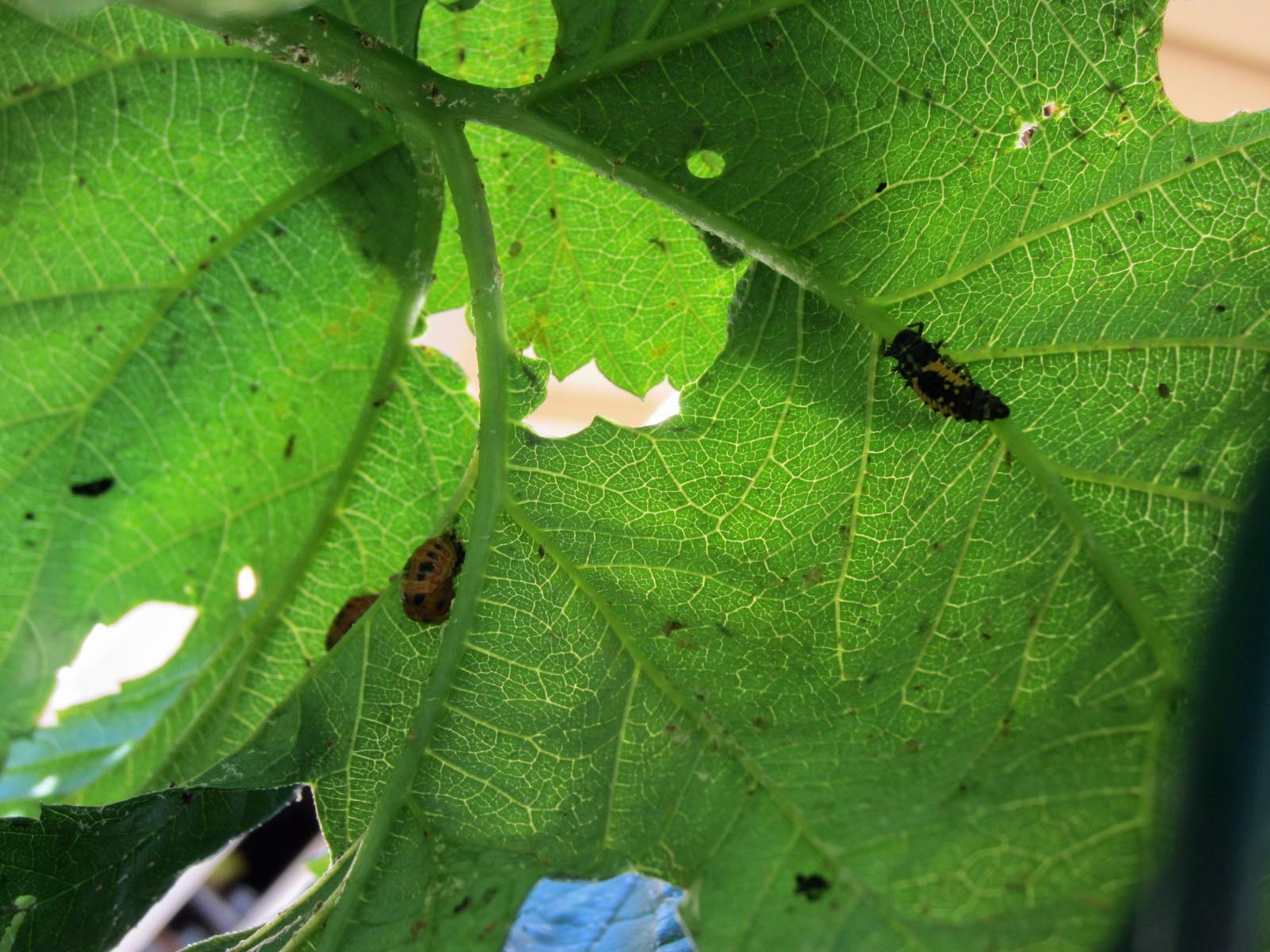
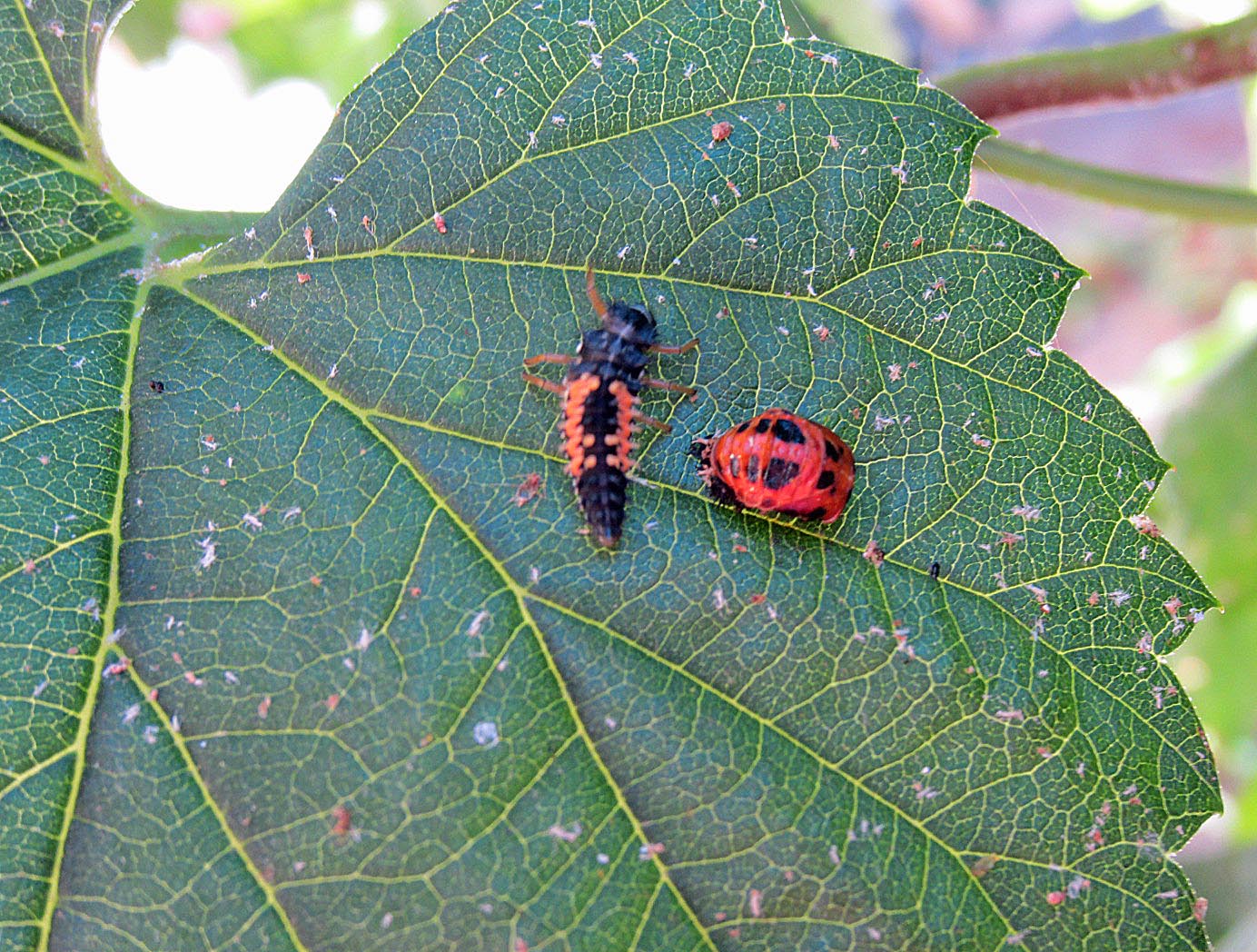
Various stages of ladybug beetle larvae.  The dark "spots" are eggs that eventually "hatch" into the larvae, of which there are several sizes here.  Once they molt 3 times as larvae, then they become pupae (like the one closest to center), before they transform into the adults we are more familiar with.

Various stages of ladybug larvae. Eggs are typically a yellow-orange color, that eventually “hatch” into the larvae, of which there are several sizes here. Once they molt 3 times as larvae, then they become pupae (like the one closest to center), before they transform into the adults we are more familiar with.

A beautiful picture of two non-adult ladybugs.  The one on the right is almost an adult, but still has no wing differentiation; it is the pupal stage, occuring just after the larva on the left molts 3 times.  The youngster larvae are voracious eaters. Adults also eat plant pests such as aphids, but are designed more for their beauty, ability to fly off elsewhere, meet other adults, lay more eggs, and ensure the survival of the species...;-)

A beautiful picture of two non-adult ladybugs. The one on the right is almost an adult, but still has no wing differentiation; it is the pupal stage, occurring just after the larva on the left molts 3 times. The youngster larvae are voracious eaters. Adults also eat many aphids, but function more as re-locators, flying off elsewhere, meeting other adults, laying more eggs, and ensuring the survival of the species, all in the general time frame of 1 month…;-)


No deer here!

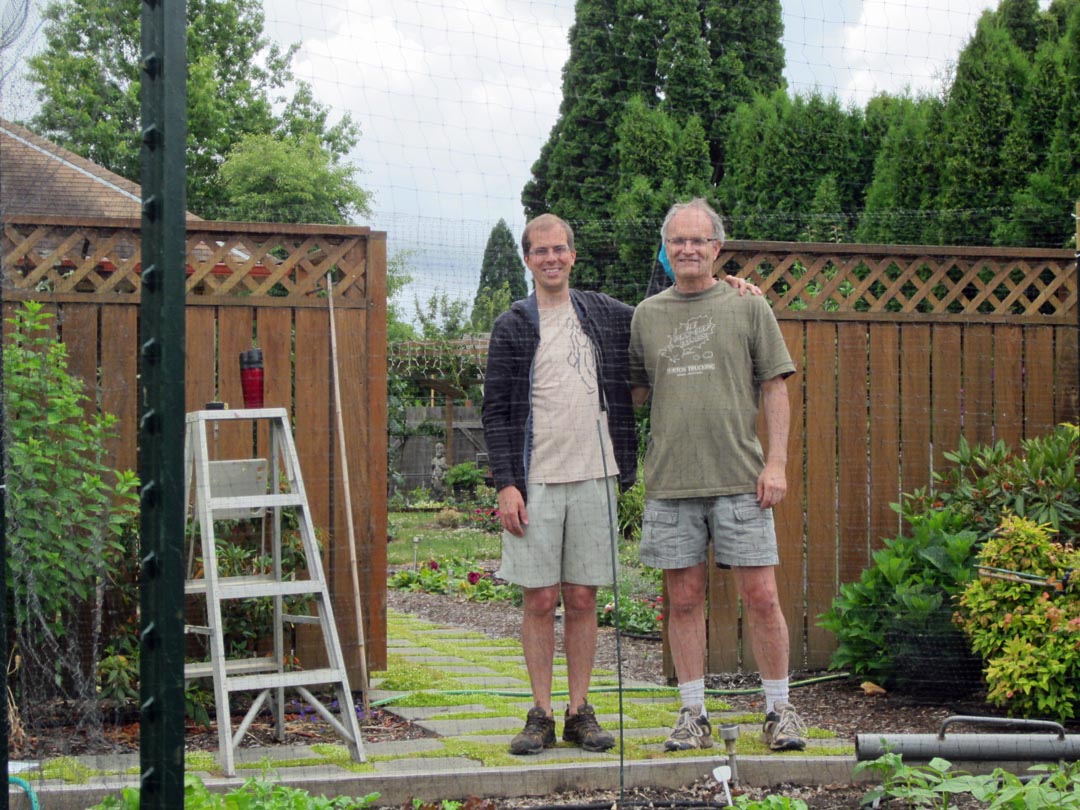
This is what we like…”invisible” fencing that deer really don’t like because it is so hard for them to see.

The "super-guys" modestly not showing off their muscles after post-digging.   Nice netting...can hardly see it!

The “super-guys” modestly not showing off their muscles after post-digging. Nice netting…can hardly see it!

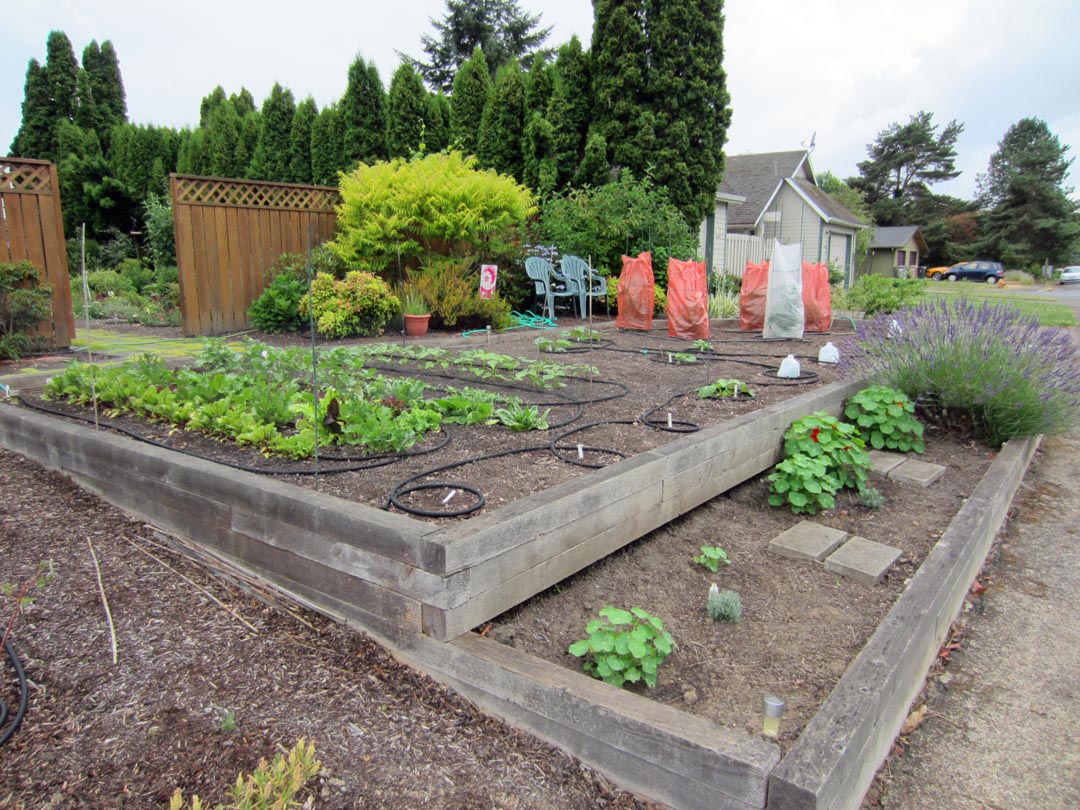
Finally protected, just in time to remove all covers and jackets on the CG inhabitants.  With gratitude to the generosity of best friends with muscle power, the fencing got put up in a couple of hours, and looks great.  It is so much easier being able to walk inside freely instead of pulling back netting.

Yep, still level-headed after pounding posts!

Yep, still level-headed after pounding posts!

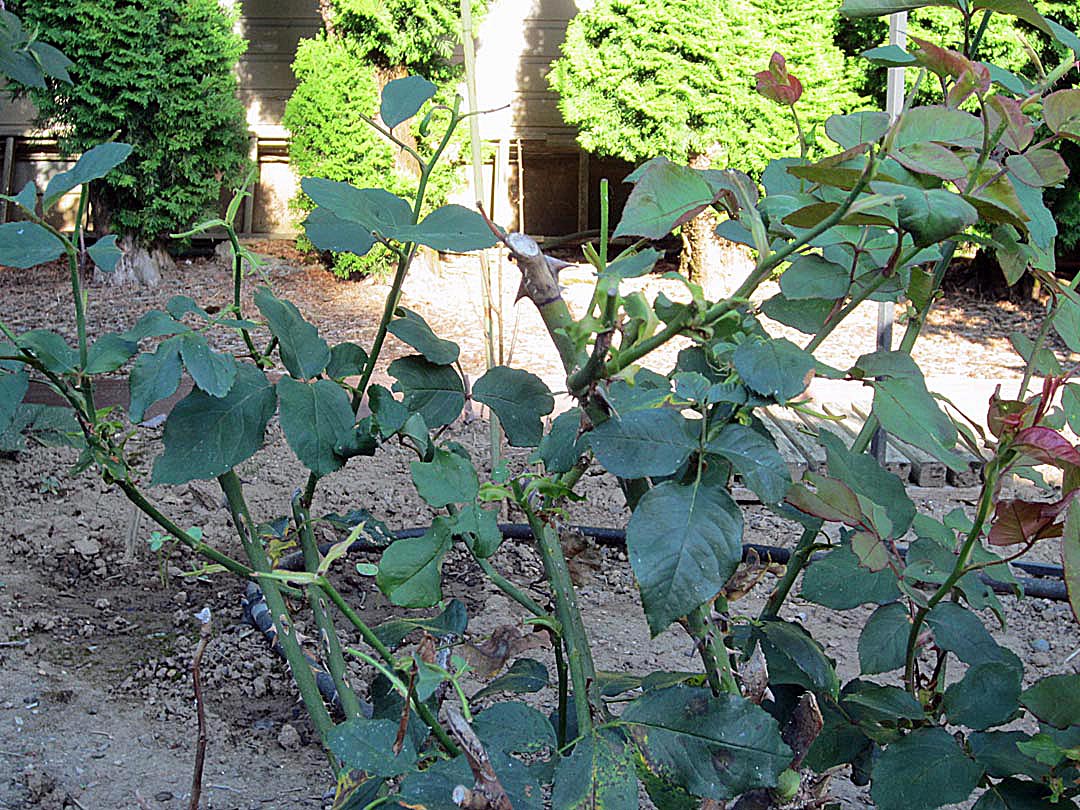
But these 4-leggeds are persistent in browsing, and decided if they can’t have lettuce or beans, then they’ll nibble some dogwood tips a few feet away.  They still manage to wind their way in from the neighbor’s garden when our barriers are not perfectly intact, and continue to harass my roses. and apples in the house yard.  Perhaps I will still see some small rosebuds this fall.

BrowsedRoses

Still no roses this year. The browsers escape into the garden through neighbor’s hedge on occasion.

Young lavender are playing sentinels for the recent melon sprouts in the pots.

Lavender seedling sentinels for the sprouting melons.  Keep those deer browsers out!

Lavender seedling sentinels for the sprouting melons. Keep those deer browsers out!

In between the gaps…a gallery

A glimpse into the menagerie of the community garden and general house yard through fall and winter 2013/2014.

Always like to show off what our browsers can do when they put their minds to it.  Push down that netting to get the delectable bean leaf tips! They've developed finesse so they don't get their teeth caught in the netting...

Always like to show off what our browsers can do when they put their minds to it. Push down that netting to get the delectable bean leaf tips! They’ve developed finesse so they don’t get their teeth caught in the netting…

Apologies to our beautiful praying Mantis, who is probably eyeing an insect or two under the netting.  What a beaut!

Apologies to our beautiful praying Mantis, who is probably eyeing an insect or two under the netting. What a beaut!

Tasty greens sprouting for fall crop.  Mature beets further right even overwintered well under the snow pack.

Tasty greens sprouting for fall crop. Mature beets further right even overwintered well under the snow pack.

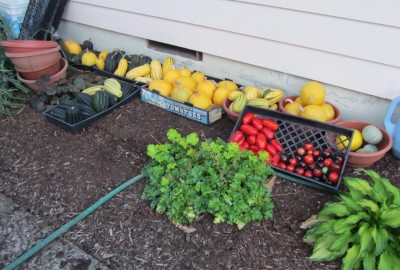
The typical way we keep the squash, melon, and tomato harvest aired and dry during the mild, not-too-rainy days of fall....stored under my eaves.

The typical way we keep the squash, melon, and tomato harvest aired and dry during the mild, not-too-rainy days of fall….stored under my eaves.

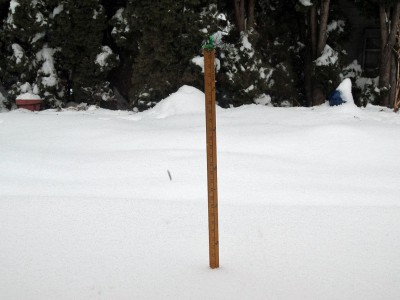
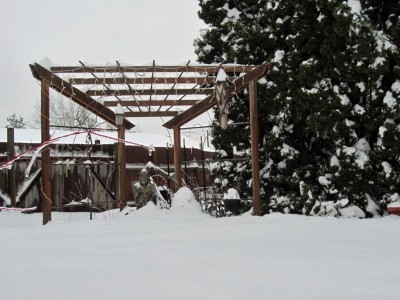
A record-setting snow-then-freeze episode the very first weekend of December 2013, followed by a record-setting snowfall in early February 2014, made us very aware of how little we can predict anything anymore, or when our gardens are tested to the maximum adaptability, and how miraculously resilient plants can be.  The witnessing of when a healthy, mature plant “decides” it will not struggle to survive the next year, but yield to the new energies of the next generation of seedlings.

Where's the bench seat?!

Where’s the bench seat?!

How Deep? 020814

14″ AFTER the snow has packed down for 3 days…

The birds had to learn to eat snow on their feeder for a few days.  Thank goodness for seeds on the old flower stalks, although the snow buried a lot of those.

The birds had to learn to eat snow on their feeder for a few days. Thank goodness for seeds on the old flower stalks, although the snow buried a lot of those.

And spring brings the energy of renewal…

2014-Kiwi Arbor-a

Kwan Yin being sheltered by a bower of the Siberian kiwi vine.


A year gone by, surely you jest!

The summer Solstice energies always help things get growing...sometimes too fast...bolting radishes!

The summer Solstice energies always help things get growing…sometimes too fast…bolting radishes and arugula!  Garden is awake!

I don’t even try to mentally grasp at the reality of a whole year gone by since last posting. It does feel like there are several timelines moving simultaneously, and depending on what I am doing there is rarely a sense of linear time, except for specific moments “in time”. This is the true reality, non-linear time that is, so a year feels like a month or two, sometimes, and at times a week feels like two months ago.

Many wonderful happenings and blessings in life have manifested over the last year, and there is not a lot of time left for keeping garden updates. I surely have mentioned that it is enough work just taking care of the garden after a job! The entry of a companion into my life has broadened my horizons once again, and his generosity in embracing me into his very active life has provided new opportunities to travel, as well as a busier schedule than I was used to. When he sustained a skiing accident in mid-February, my life-roles expanded further into helping him heal from pelvis and hip fractures. Fortunately he is very ambulatory these days, but healing will continue for up to a year, all said and done. Complete recovery, but a slow journey. This spring it was all I could do to bring my focus to engage the CG and get it up and running. February became May before I knew it.

Rereading last year’s entry regarding spring weather in 2013, which I don’t remember one iota, it doesn’t seem so different from this year. We’ve had a long stretch of mild, dry weather in May and June, now being balanced with a touch of late June rain. As usual, the tomatoes are still cloaked in their finest red jackets, probably till July 4, or when the new deer fencing goes up.

We had one of the most severe winters I can recall in my 35-year tenure here, and it was interesting to see plants survived two cold events. The first event occurred the first week of December, 2013, when the southern Willamette Valley received about 1 foot of snow in a couple of days, accompanied by sub-freezing temperatures that lasted for nearly a week. I had the pleasure of stepping into a foot of snow with only my Chacos on, arriving home at 2:00 am from a week-long vacation in Mexico. This was the event that probably killed off many old hedges around town and all my Spanish lavender (the English type held up fine).

Then came the huge snow load of February 7th, when it snowed upwards of 15” in 48 hours; yes, record-setting for that rate! However, it wasn’t overly cold during that session, but the lavenders were completely covered. The snow probably insulated the seed pods, which did sprout a plethora of seedlings in front of the CG, almost like a little carpet. These will eventually be planted out again to replenish the Spanish type (Lavandula stoechas). The old L. stoechas and L. viride in front had to be removed, and were replaced mostly with the hardier L. angustifolia.
If Quan Yin is just over 3 feet tall...

If Quan Yin is just over 3 feet tall…

The bambi/es made their presence known early on this year, before the CG was even put in, dessimating my roses twice, so there are absolutely no flowers, and inhaling two of our newly-acquired tomato seedlings for the CG. Roses I am not so attached to, but….

A bumper crop of Lakemont seedless white grapes after a hard winter.  Was it modified pruning, or signs of plant maturity?

A bumper crop of Lakemont seedless white grapes after a hard winter. Was it modified pruning, or signs of plant maturity?

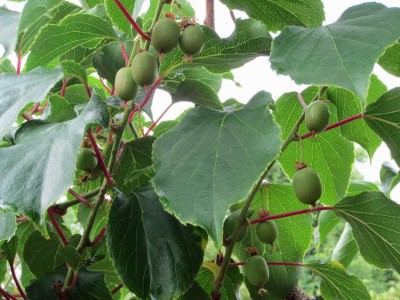
The odd weather affected flowering of the pear and columnar apples in the house yard, so there is absolutely no fruit this year. On the flip side, I have never seen so many grape clusters on a still-young grapevine, and I have done cluster thinning for the sake of the plant. And, for the first time, my Siberian kiwi is fruiting.  Now 5 or 6 years old, there appear to be a couple dozen small fruit. They aren’t lying about kiwis needing to be at least 5 years old before they start maturing, but I was starting to hold my breath because there were only a few blossoms last year that did not yield fruit. This is like a bumper crop!

Here’s to a bountiful year!

Success!  After 5 to 6 years, and a hard winter, several dozen Siberian kiwi fruit have manifested.

Success! After 5 to 6 years, and a hard winter, several dozen Siberian kiwi fruit have manifested.